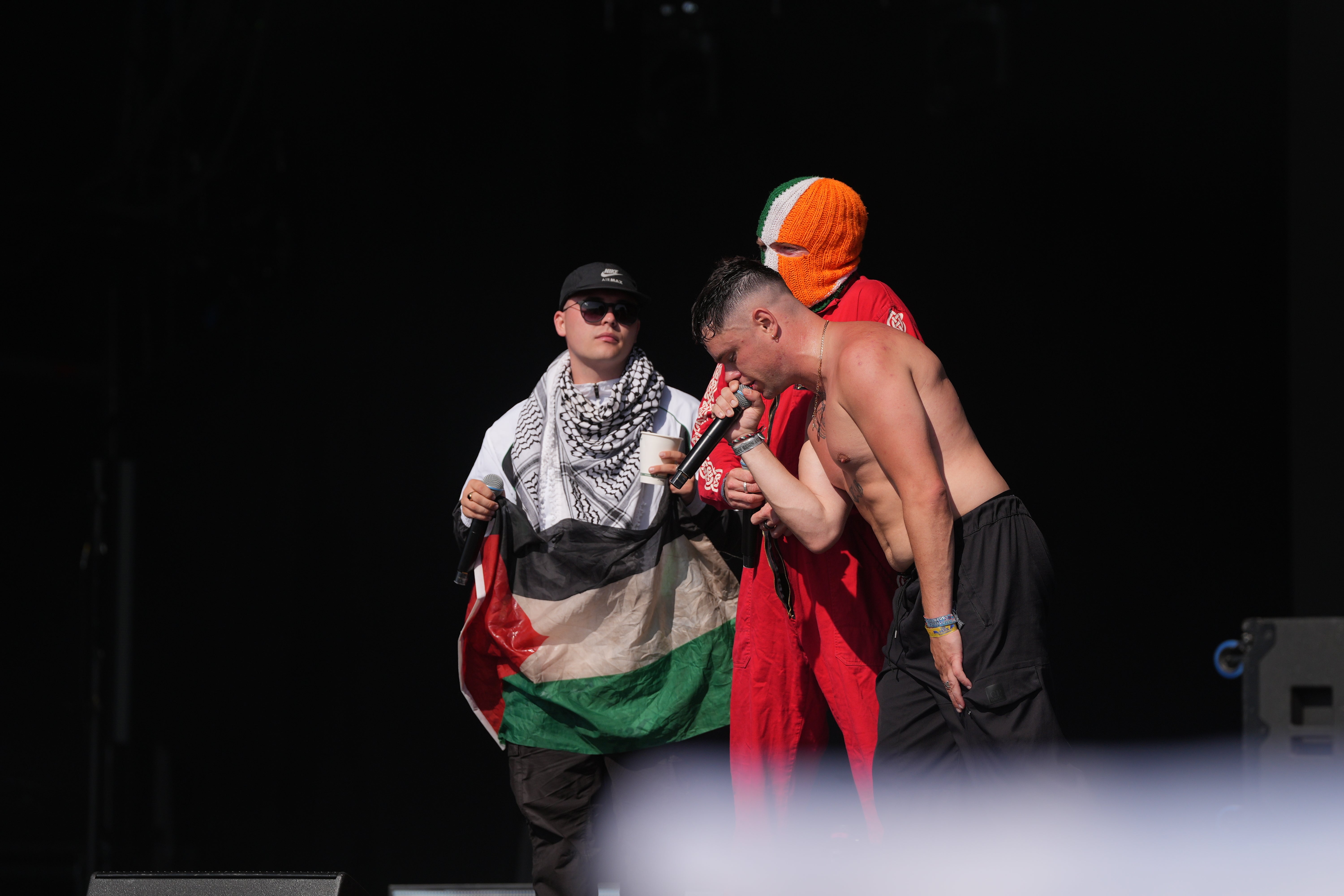

The authorities have formally concluded their investigation into Kneecap’s recent show at the Glastonbury Festival, determining that no additional measures are necessary. The inquiry, which attracted interest from both supporters and political analysts, was initiated due to issues raised about aspects of the band’s performance, such as the supposed political imagery and claimed violations of public conduct regulations.
Kneecap, a hip-hop ensemble from Belfast renowned for their bold opinions and dynamic stage antics, stirred up controversy with their performance on a major festival stage. During their act, they used visuals and language that some observers perceived as politically provocative, leading to public discussion and ultimately a reaction from the authorities.
The group, which often addresses themes related to Irish identity, historical conflict, and social resistance in their music, has never shied away from controversy. Their use of satire, Irish language lyrics, and politically loaded references has earned them both a loyal following and significant criticism. For Kneecap, performances are not just about music—they are acts of cultural expression and, often, political commentary.
Following their Glastonbury appearance, several complaints were reportedly made to authorities, prompting a preliminary investigation into whether the group had violated any laws during their performance. Speculation swirled online and in the press about potential charges, with some voices calling the show inflammatory, while others defended it as a legitimate expression of free speech and artistic freedom.
However, after reviewing available footage, statements, and relevant context, police have determined that the performance did not constitute a criminal offense. A spokesperson for the department confirmed that the matter has now been closed, with no charges filed and no further inquiries planned.
Este fallo ha generado reacciones diversas. Los partidarios del grupo han aceptado la decisión, sosteniendo que cualquier intento de censurar o penalizar el arte performativo por su contenido político establecería un precedente peligroso. Según ellos, la práctica artística de Kneecap refleja problemas duraderos de identidad, marginación y disidencia, especialmente en el contexto de Irlanda e Irlanda del Norte.
Critics, on the other hand, remain uneasy about the influence of politically provocative acts on large public stages, especially in high-profile settings like Glastonbury, which attracts hundreds of thousands of attendees and global media coverage. For them, the concern lies not in the legality of such performances but in their potential to provoke division or misunderstandings.
Kneecap, for their part, responded to the investigation—and its conclusion—with characteristic irreverence. In a brief statement shared on social media, they appeared unfazed by the scrutiny, suggesting that their performance was never intended to incite but rather to challenge prevailing narratives through music and satire. They reiterated that their work is rooted in lived experience and cultural commentary, not provocation for provocation’s sake.
The episode raises broader questions about the intersection of art, politics, and public platforms. In a time when musicians and performers are increasingly using their visibility to engage with political themes, the boundaries of acceptable expression remain fluid and contested. Events like Glastonbury, which historically have provided space for activism and counterculture, are at the forefront of these debates.
Legal specialists highlight that the safeguards for free speech differ based on the jurisdiction and situation. In the UK, the location of the festival, the law allows for political discourse in art, provided it does not provoke violence or animosity. Judging if an act goes beyond these boundaries can be very subjective and often demands detailed legal and cultural analysis.
Festival organizers have so far not commented in detail on the matter but have long maintained that Glastonbury is a venue that celebrates diverse voices and creative freedom. The inclusion of acts like Kneecap fits within the festival’s legacy of platforming artists who push boundaries and engage with social issues.
As the dust settles, Kneecap’s performance—and the reaction it provoked—serves as a reminder of the power of music to stir conversation and test societal norms. For some, that power is essential to democracy and cultural vitality. For others, it can appear confrontational or unsettling, especially when tied to historical or political tensions.
The conclusion of the police inquiry might officially close the case, yet the larger discussion regarding the influence of politically infused art in public areas is still ongoing. Regardless of whether Kneecap’s performance at Glastonbury is seen as stirring creative expression or contentious communication, it unmistakably drew interest—and in doing so, emphasized the long-lasting relationship between music, personal identity, and political expression.
As artists continue to navigate the evolving boundaries of expression, cases like this one illustrate how public reaction, legal frameworks, and cultural context all intersect to shape what is considered acceptable or controversial. In the case of Kneecap, the conversation may have begun on stage—but it now echoes far beyond the festival grounds.